
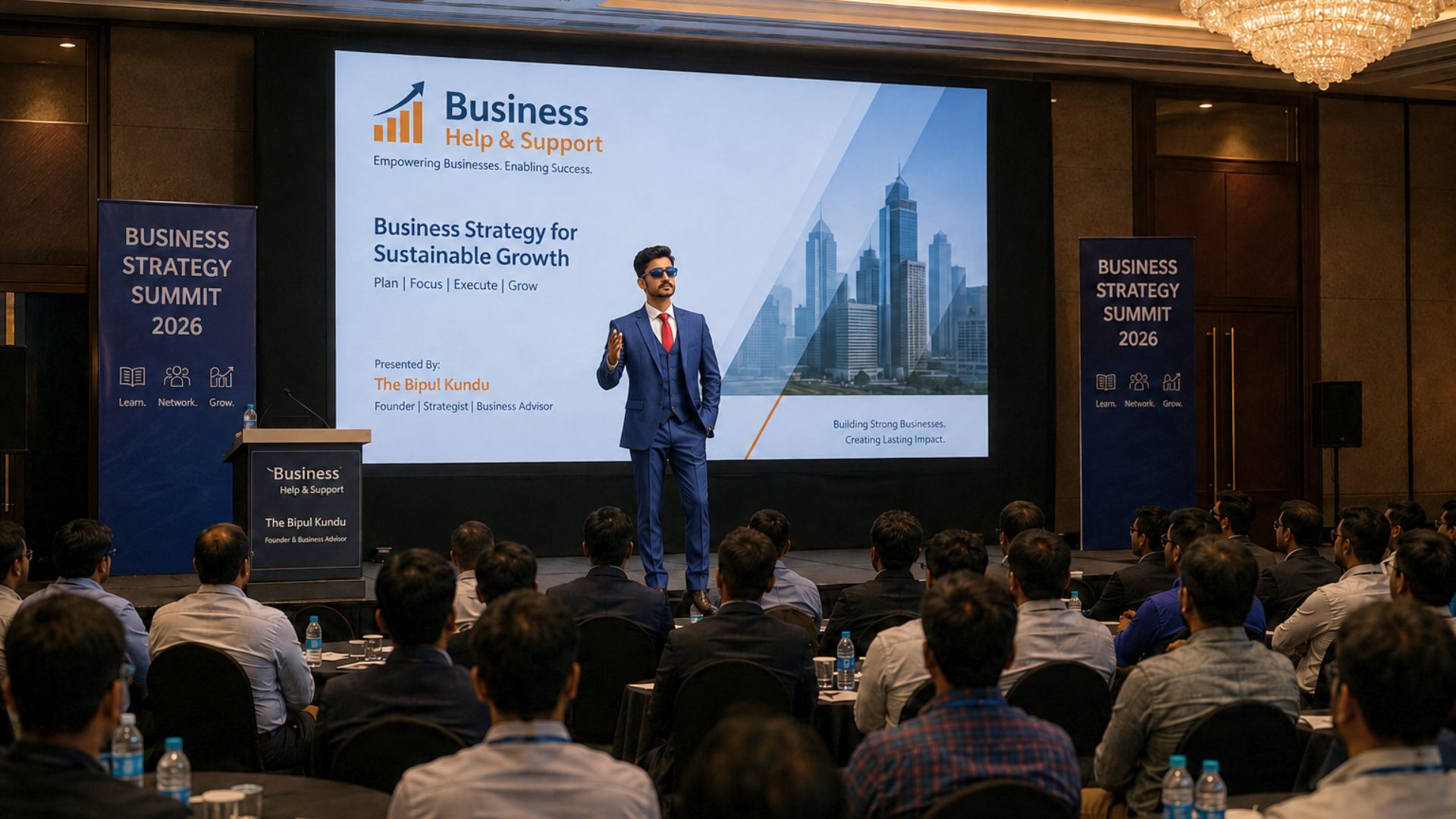
Business Strategy of Business Help & Support
If marketing is the voice, the Business Strategy is indeed the brain—the logic that ensures every action leads to a specific, measurable victory. Moving from a quick "cash-grab" to a "legacy brand" requires shifting your focus from transactions to trust.Here is a detailed breakdown of how to structure each of those three strategic levels:
1. Short-Term Seasonal Strategy: The "Cash Sprint"
Focus: High velocity, immediate ROI, and trend exploitation.Goal: To maximize profit within a specific window (holidays, festivals, or seasons).
Market Positioning: Be the most convenient or timely solution. You aren't building a deep relationship; you are solving an immediate, urgent need.
The Blueprint:
Inventory Management: Use "Just-in-Time" logistics. Minimize overhead so you aren't left with dead stock when the season ends.
Pricing: Use Dynamic Pricing. High demand allows for premium margins, but you must be ready to slash prices for a "clearance" at the very end.
Marketing: Aggressive, direct-response ads. Use scarcity ("Limited Edition," "Only for June") to trigger FOMO (Fear of Missing Out).
Success Metric: Net Profit and Inventory Turnover.
2. Long-Term Business Strategy: The "Brand Builder"
Focus: Differentiation, customer loyalty, and market share.Goal: To move away from price competition and become a "household name" in your industry.
Market Positioning: Ownership of a specific "vibe" or "standard." You want customers to choose you because of who you are, not just because you’re available.
The Blueprint:
UVP Refinement: Identify what you do better than anyone else (e.g., "The most durable," "The best customer service," "The most eco-friendly").
Content & Community: Invest in storytelling. Don’t just sell products; sell the lifestyle or the problem your brand solves.
Operational Excellence: Standardize your quality. A brand dies when the customer experience is inconsistent.
Success Metric: Customer Lifetime Value (LTV) and Brand Equity.
3. Lifetime Business Strategy: The "Legacy & Ecosystem"
Focus: Scalability, physical presence, and generational impact.Goal: To integrate the brand into the daily lives of the community through both digital and physical (Phygital) touchpoints.
Market Positioning: The "Anchor." You become a reliable institution in the local and global market.
The Blueprint:
Omnichannel Integration: Seamlessly bridge your online presence with local shops. A customer should be able to browse on a phone and pick up or experience the brand in a physical shop.
Local Dominance: Tailor physical shops to their specific neighborhoods. This creates a "community hub" feel that giant corporations can't replicate.
Diversification: Use the "Brain" (the strategy) to move into complementary markets. If you own a successful clothing brand, the lifetime strategy might include physical tailoring shops or lifestyle cafes.
Sustainability & Systems: Build systems that work without the founder. This is where the "blueprint" allows the business to live for 50+ years.
Success Metric: Market Penetration and Sustainability.
Thank you. Hope your great future!
Regards, The Bipul Kundu.
Contact Now